

This isn’t just a cursor.
It’s the next slide in your deck.
Your opening line in front of the room.
The question you can’t not ask.
The thin line between “new” and relevant.
The kind of friction mediocrity can’t survive.
And you’re wide awake at
2:47A
Just you and the cursor.
And the pressure.
Pressure will do what pressure does. Unless the system is wired for contact.
We go to the source.
Powers that control what pressure gives you and what it takes away.
And the mental operating system underneath it all.*
Everything else follows—words, decks, decisions, deals, relevance.
Automatically.
Wire the OS.
Change what pressure can do.
*Based on our ten-year, 8K-survey, 200-interview study.
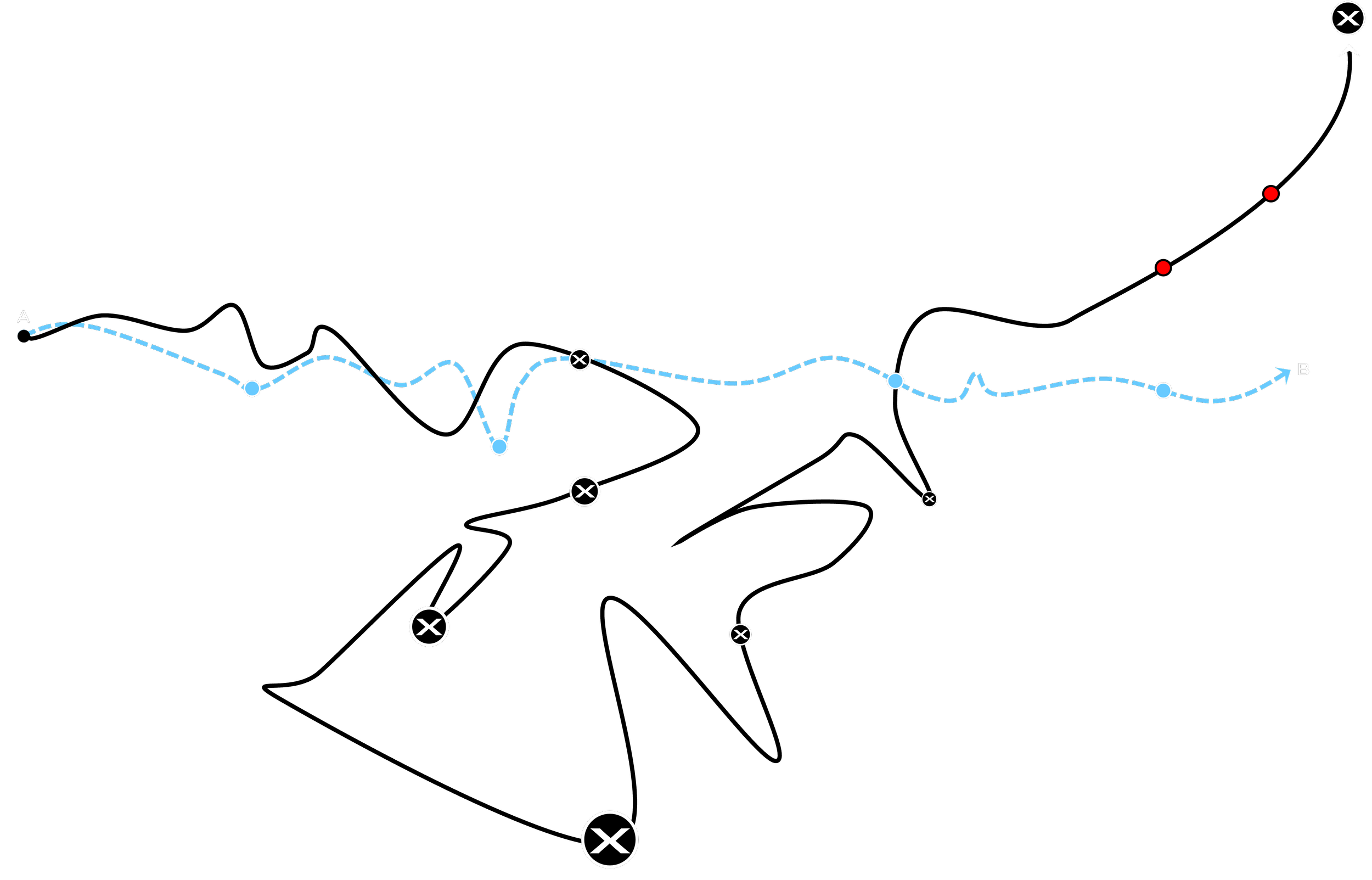

You are where?
On any given
MON
DAY
—things go slightly off the rails. It’s not just meet, nod, next.
You’re below the dotted line.
A little lost, stretching, rebuilding, or straight-up reinventing.
You’re in X.
The bigger the ask, the bigger the pressure.
If pressure feels like the enemy,
the system isn’t ready.

PRES
SUR
IZED.
When the system isn’t wired for pressure, powers switch to
counterfeits.

Is this bulletproof logic—
or burying ingenuity under a flood of “facts?”
Building something brilliant—
or just something different? Again.
Moving at speed and scale—
or just hustling to feed a metric machine?
Is killing this project smart—
or just appeasing the cautious?
Are you trusted or just obeyed?
Counterfeits
are hard to fix and harder to see.
And you can’t fix what you can’t see.
*8K people we surveyed see counterfeits daily or weekly.

1 Our labs are crucibles, not courses.
2 Crucibles aren’t gamified gauntlets that simulate business. They are business.
3 ☩Experiences that rewrite the operating system in your head—update the OS, everything else runs better.
4 ☩ Experiments that reveal automatic habits under real-world volatility.
5 ☩ Documentary film to diagnose the cause and effect of behavior without the corporate sugarcoat.
6 ¶ A crucible pulls reflexes to the surface—beautiful or brutal—and asks: Are they serving you or sabotaging you?
7 Because under pressure, you revert to your OS.
8 ‡ In ways you can’t see.
9 We help you see it and optimize it.* Fast.
*Not guessing. Based on 21K hrs. of research, 8K surveys, 200 interviews.
How we do it.
10 ¶ In rooms, not Zoom. Big change doesn’t happen in a browser tab.
11 On your plans, your projects. You talk, we ask. You fix, we facilitate.
12 ☩ Content built for crucibles, in crucibles, with hard core scientific fingerprints.
13 Made by operators, execs, and founders who’ve bled for the work.
14 ‡ Most training hacks at behavior—the branches. We dig for beliefs—the roots.
15 All engineered for X.

2
arenas.
We run crucibles in

Optimize the system under pressure.
Most people peak at “impressive.”
A ten.
A few reset the scale.
Eleven.
Elevens operate on two dials: drive and depth.
Drive is controlled velocity—discipline, decisive speed, relentless focus.
Depth is the relevance behind the velocity: to kill your own best idea, see the need no one voiced, trade ego for insight. It’s intellectual honesty, weaponized to be wrong now and right eventually.
Drive is everywhere, depth is rare.
The gap between 2X and 10X impact isn’t harder work or a mammoth skillset.
It’s raw, non-negotiable intensity at your core.
You can’t outsource it.
You can’t certify it.
You forge it or you plateau.
ELEVEN forges it.
For leaders who turn the tide, and anyone doing work that can’t be faked, finessed, or spreadsheeted into existence.

Learn more about Eleven.
Build the mental operating system.
Most people think they’re a type—introvert, extrovert, red, blue, high “O," low “N."
It’s a shortcut that’s too short.
A box.
Real science says we shift when context shifts. That’s human.
Your type is a tendency, not absolute truth.
Personality is the UI, how you show up.
Core is the operating system underneath: the raw intensity of curiosity, ingenuity, nerve, veracity.
And the rest.
Personalities clash, core doesn’t.
Get a stronger core and the same personalities suddenly play in the same band instead of fighting over the set list or longest solo.
UNTYPED is the OS upgrade.
Keep your type, train your core.
For operators, creators, fixers, sellers, founders. Anyone whose work demands more range than a four-letter code.
Learn more about Untyped.

X
What X are you up against?
The surface never shows the problem.
These are three of the deepest.
Each looks different.
All hide the same thing underneath.
X-ray where you are.
The primer docs are heat maps.

You thought the project was a straight shot. It’s not. That’s good. And the hard part. You’re in the wild.
-
1. You’re mid-initiative. Data’s shifting, pressure’s up. The room feels off. What happens?
a. Someone names it fast, even without a fix.
b. Tension rises, but the group stays on-script.
c. One or two try a light pivot, keep the tempo up.
d. No one calls it. Everyone’s hoping someone else will.
2. The plan made sense at kickoff. Now the terrain’s changed. What’s the real move?
a. Pause and reinterrogate the premise.
b. Massage the story to fit what’s unfolding.
c. Push forward. The plan is already sold.
d. Quietly hope it auto-corrects downstream.
3. When decisions get heavier and direction starts to blur, what’s the team instinct?
a. Hit the brakes. Reopen the core questions.
b. Double down on rationale—tighten the narrative.
c. Defer. Someone more senior will make the call.
d. Stick to the roadmap. It’s too late to swerve.
4. When someone says, “Something’s not right,” the room’s response is:
a. Engaged. That’s what we need to hear.
b. Quiet. No one wants to derail momentum.
c. Defensive. The plan is already in motion.
d. Awkward. No one follows up. We move on.
5. Which risk feels bigger right now?
a. Staying loyal to a plan that’s already expired.
b. Admitting uncertainty after weeks of selling confidence.
c. Exposing cracks that could slow everything down.
d. Saying what you see—and being the only one.
VERDICT?
Handling the turns. (mostly A’s)
Your team spots the shift early and adjusts without drama. Pressure sharpens focus. People speak up fast and stay clear on what matters even when the plan changes.
Wobbly but working. (mix of B’s and C’s)
You’re still moving, but people are overstating how clear things are. There’s pressure to act confident even when it’s not there. Things aren’t breaking, but they’re not grounded.
Dodging the real issues. (lots of C’s and D’s)
You’re pushing forward without solving what’s off. People sense the shift but won’t name it. Tension is avoided. Clarity is leaking.
In over your head. (heavy D’s)
The thread is gone. People are talking but not deciding. Leaders are quiet or scattered. You’re still moving, but no one’s sure where or why.

Tap for a PDF primer on the wild.

You can merge a co. and divide a culture. You can reset org. charts and change nothing. You’re in the reorg.
-
1. Whose playbook are you using?
a. We’re blending both orgs intentionally.
b. We’re defaulting to the dominant side.
c. Depends on the room.
c. No one knows anymore.
2. When tension shows up in a meeting, what happens?
a. It sparks productive conversation.
b. It gets avoided and parked.
c. One voice usually wins.
d. Everyone pretends they’re aligned.
3. What do people say privately that they don’t say in the room?
a. Not much. We say the hard stuff out loud.
b. “This doesn’t feel like us anymore.”
c. “This is all just theater.”
d. “We’ll go along with it…for now.”
4. What’s your emotional power source right now?
a. Curiosity
b. Caution
c. Legacy pride.
d. Fear of being seen as resistant.
5. When someone challenges the direction, the vibe is:
a. Engaged
b. Defensive
c. Dismissive
d. Confused
6. If you asked your team who they’re becoming through this reorg, would they say:
a. Something new.
b. A diluted version of the old.
c. I don’t know anymore.
d. I haven’t asked them
VERDICT?
You’ve crossed the hard line. (Mostly A’s)
There’s trust, tension gets used, and people disagree without hedging. You’re not just integrating systems. You’re building something new—for real.
Walking on eggshells. (mix of B’s and C’s)
You’re being careful, not clear. Some hard truths stay backstage. People are cooperating, not syncing. Everyone’s avoiding a blow-up, but nothing bold is happening either.
Keeping up appearances. (lots of C’s and D’s)
Alignment looks good on paper but breaks in behavior. Decisions don’t stick. Teams nod in meetings, then rewrite things after. The merger isn’t failing. It’s fading.
Still two teams. (heavy D’s)
You’re not one company. You’re pretending to be. People pick sides. Power’s performative. No one’s saying what they mean and no one’s fixing what that’s doing to the work.
Tap for a PDF primer on mergers.

You’re mid-sprint, mid-rebrand, mid-anything. The work is loud. The signal’s lost. You’re in the noise.
-
1. Your team is busy. Like, full-on sprint mode. What’s the signal?
a. Everyone can name the “one thing” we’re driving toward.
b. There’s general alignment, but the “why” keeps changing.
c. Depends who you ask.
d. No one’s stopped long enough to check.
2. The last few major decisions felt:
a. Focused and rooted in real insight.
b. Sharp in the moment but fuzzy in retrospect.
c. Fine, but mostly reactive.
d. Fast, noisy, and forgettable.
3. What gets the most airtime in meetings?
a. The core problem we’re trying to solve.
b. The roadmap and status updates.
c. Smart ideas with no place to land.
d. Stuff that makes us look productive.
4. What happens when someone says, “This isn’t it yet”?
a. The room leans in. We work it.
b. There’s a pause, but we mostly move on.
c. That person gets labeled difficult.
d. No one says that here.
5. The work is technically right. But it’s not landing. What’s the next move?
a. Stop. Get clear. Ask the harder question.
b. Polish it until it feels better.
c. Push it out anyway. The deadline’s real.
d. Cross fingers and say it’s “MVP.”
VERDICT?
Clear and focused. (mostly A’s)
People know what matters. There’s plenty happening, but priorities are sharp. Teams make decisions that stick. The pace is fast, but not frantic.
Lots of movement, little direction. (mix of B’s and C’s)
You’re busy, not clear. Teams are doing good work, but nobody can say what it’s for. Decisions change week to week. You’re productive, but not purposeful.
All volume, no voice. (lots of C’s and D’s)
Everyone’s building, but nothing’s landing. Projects are moving, but disconnected. People nod in meetings, then do something else. The loudest ideas win—until the next one comes.
Can’t hear what matters. (heavy D’s)
It’s chaos in disguise. Everyone’s overwhelmed. No one feels safe saying, “This isn’t it.” The speed is masking a lack of direction. Teams are burning out without breaking through.